BSD
Shkolim 7b (2)
9 Adar II 5784. 03/19/24
Brief notes.
1 – We began a new משנה that takes us to the next step of the שקלים process.
As the שקלים came into the בית המקדש, they were all placed in an ‘office’- לשכה.
3 times a year, a portion of the שקלים were removed from this לשכה and placed into 3 large jugs or vats. קופות.
The 3 dates are:
- 15 days before פסח,
- 15 days before שבועות and
- 15 days before ראש השנה.
2 – The משנה then diverges to מעשר בהמה and suggests that these 3 dates (for the placing the שקלים into the קופות) correspond to the three cut-off dates for מעשר בהמה.

To clarify:
מן התורה all בהמות born within one year are considered one lot. Meaning that when herding them thru the gate to be מקדיש each tenth, one can include only בהמות that were born within this particular year.
Mixing animals from one year with others born in a different year is not allowed as we learnt at the beginning of מסכת ראש השנה.

3 – When exactly is this ‘one year’ מן התורה?
Three opinions:
Reb Meir – from ראש חודש אלול to ראש חודש אלול.
Reb Elozor and Reb Shimon – from one ראש השנה to the next.
Ben Azzai – From ראש השנה until ראש חודש אלול. And another separate ‘year’ for the entire חודש אלול!
We will delve into the explanation of the 3 opinions at the next Shiur IY”H.
All of the above is at the דאורייתא level. A one full year cycle.
4 – {This paragraph was corrected on 03/28/2024]
However, the חכמים noticed a pattern with the cattle ranchers.
They would hesitate to perform the מעשר בהמה process until the herds were very large. The ranchers reasoned that it’s in their best interest to do it in large batches so that all מעשר of every 10 are grouped together. It made it easier to bring them all up to ירושלים and avoid the בל תאחר.
So the חכמים established within the year 3 cycles or cut-off dates. When these dates arrived it was prohibited to eat any animal in one’s herd that has not gone through the מעשר process.
Now they could have chosen any 3 dates in the calendar year. The reason they chose dates before the שלש רגלים was that the above תקנה would cause the ranchers to give the מעשר just prior to these dates.
(since after these dates these dates arrived eating the animals would be prohibited unless מעשר was given).
So by designating the date before the שלש רגלים it ensured a stock of plenty of animals available for the עולי רגל.
Our משנה then states various opinions as to the exact 3 days of the beginning of a new cycle established by the חכמים.
Reb Akiva –
- 15 days before פסח, until
- 15 days before שבועות, until
- and 15 days before ראש השנה, until 15 days before פסח.
Reb Elozor and Reb Shimon –
- 1st of Nissan,
- 1st of Sivan and
- 29th of Elul.
Ben Azzai – 29th of Adar, 1st of Sivan and 20th of Av.
The reasoning behind these 3 opinions will also be discussed at the next Shiur IYH.
5 – As a preface to the גמרא further on, explaining the opinion of Ben Azai, we discussed his life in short including him being a son-in-law of Reb Akiva.
At the very least he was engaged to Reb Akiva’s daughter – קידושין without נישואין – but then divorced her.
בן עזאי explained why did didn’t remain married:
ומה אעשה, שנפשי חשקה בתורה, אפשר לעולם שיתקיים על ידי אחרים

6 – Ben Azzai used to say “the knowledge all the חכמי ישראל , in comparison to mine, is like the skin of a garlic!
Except for this קרח”.
כל חכמי ישראל דומין עלי כקליפת השום, חוץ מן הקרח הזה
If קרח is a person, then who is this mysterious Reb קרח? Or perhaps קרח means something else?
It’s a long and interesting story.
Rashi in a few places explains that קרח here means bald and Ben Azzai meant Reb Akiva – who was bald. Meaning that the only person equal to my knowledge is this baldy!

Ouch.
That’s not very respectful especially in light that בן עזאי was a student of Reb Akiva…. And his future or former father-in-law….
[We can assume (as per Tosfos below) that it was said half in jest, as it fits in the context of Ben Azzai’s talking about his brain prowess].
Rashi continues. We know that Reb Akiva had a son Reb Yehoshua. רבי יהושע בן רבי עקיבא.
We also find in many places in Sha”s a תנא with the name Reb Yehoshua son of Korcho. רבי יהושע בן קרחה.
So concludes Rashi, since the קרח in Ben Azzai’s saying refers to Reb Akiva then רבי יהושע בן רבי עקיבא is רבי יהושע בן קרחה. They are the same person.
רבינו תם in Tosfos (בכורות נח, א. ב”ב קיג, א ) does not accept it. Assume, says Tosfos, that one time Ben Azai was joking when he nicknamed Reb Akiva ‘the baldy’, but for the entire Sha”s to call his son רבי יהושע בן קרחה the ‘son of the bald Rabbi’?
Tosfos presents additional chronological proof that רבי יהושע בן קרחה is not Reb Akiva’s son.
רבינו תם concludes that surely רבי יהושע בן רבי עקיבא and רבי יהושע בן קרחה are two separate people.
קרחה the father of רבי יהושע is the name of a person called קרחה similar to the original קֹרַח.
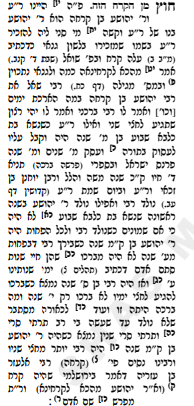
מסכת בכורות
דף נח ע”א
7 – We concluded with the amazing words of Reb Chaim Vital in
“My master [The AriZa”l] told me that he saw with his eyes, both,
רבי יהושע בן קרחה and יהושע the son of רבי עקיבא and they are not the same person, as Rashi writes.
גם אמר לי מורי ז”ל, כי הוא ראה בעיניו את ר’ יהושע בן קרחה, ואת ר’ יהושע בנו של ר’ עקיבא, ואינם איש אחד, הפך מה שכתב רש”י ז”ל בפ”ק דשבועות בסוגיא דבהרת ששניהם אחד: