BSD
Shkolim 7b
2 Adar II 5784. 03/12/2024
One major topic this week with many sub-topics.
1- Repeating the Torah of another and giving the originator credit.
a – If the originator has passed away – שפתותיו דובבות בקבר .
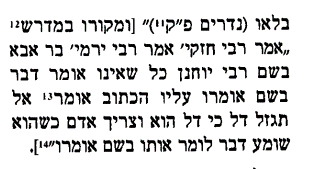
b – כל האומר דבר בשם אומרו מביא גאולה לעולם.
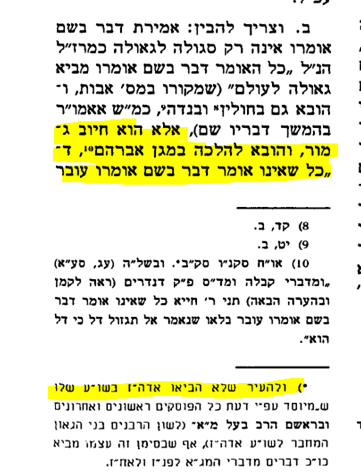
c – The איסור גזילה if one plagiarizes. מגן אברהם קנו, ב
2- In relation to ‘c’ above, we mentioned the dialogue between the Tzanzer Rebbe, דברי חיים, Reb Chiam Halbesrstam and his contemporary the מהר”ם שי”ק. YD 156.
Mahara”m – Moshe Shick
The issue was if one copies ideas from a source, then prints it in his own book without giving the originator credit. Is that גזילה?
(others have noted that surprisingly, neither mention the מגן אברהם).
3- We mentioned that, as the Rebbe points out, the Alter Rebbe omits ruling of the מגן אברהם. LS 36 Ki Siso 2.
4 – In regards to plagiarism, we mentioned the somewhat humorous Din Torah that occurred about 3 hundred years ago between siblings that inherited from their wealthy father a nice fortune. In addition to the allotted sum for every son, the father inserted in his will the stipulation that if any of his sons ‘will say a דרשה in public’ he will earn an additional sum from the estate.

One son took up the challenge and actually delivered a דרשה in public and requested the promised (additional) חלק from the his brothers.
The brothers refused to pay for various reasons.
Firstly they said ‘you call that a דרשה? You would have done better not speaking at all!’
Secondly, what he did say was plagiarized! It was not his חידושים but either he read it somewhere or heard it from someone and that’s not what our father meant!

They approached the famous פוסק of the time, Reb Yakov Reisher.
His response is in שו”ת שבות יעקב ב, יו”ד קמו.
5 – We spoke a bit about this illustrious רב who penned many books, amongst them the עיון יעקב which the basic פירוש on the עין יעקב. Additionally, he wrote the חק יעקב on אורח חיים which is printed inside the שולחן ערוך.
We mentioned him here.
In the past we spoke about a particular ruling of his and the Alter Rebbe who wrote a lengthy rebuttal on his פסק. This was regarding a person whose father didn’t sell his חמץ and passed away in middle of פסח. The issue is that despite the fact that the son automatically received a ירושה of the חמץ in middle of פסח it is אסור בהנאה and therefore perhaps he never ‘inherited’ it to begin with.
‘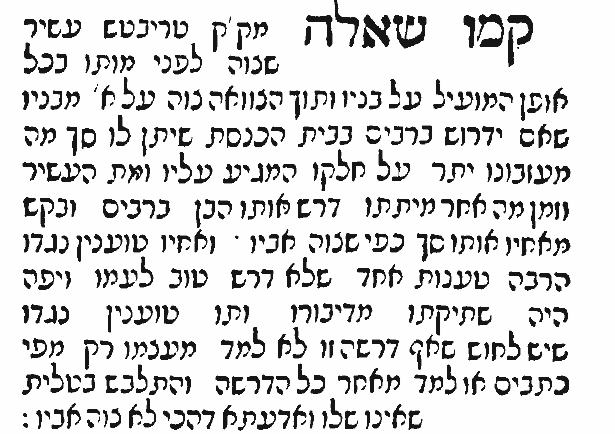
Reb Yakov responded that as to the first complaint that the son said ‘nothing’, well, that’s subjective. The brothers didn’t think it had value but others may differ and who’s to judge?

‘Occasionally a דרשן presents a דרשה that has merit and yet the listeners were not excited because the דרשן is not a polished orator, he lacks the talent to explain things well or his vocabulary is limited. Or the reverse’.
[We paused on the last words ‘Or the reverse’. Did Reb Yaakov mean that the opposite is also true…..Sometimes a דרשן presents a דרשה that excites the listeners because the דרשן is a polished and talented orator with a rich vocabulary…. But says nothing of value….?]
Additionally, the father never stipulated that this דרשה by any of his sons needs to be knocked out of the park.
As to the second complaint that the son just repeated what he heard or read, if that can be proven beyond doubt, says Reb Yaakov it is a valid טענה.
For surely the father’s intent was for his sons ‘to be diligent in their learning’ and come up with something original.

He didn’t mean for them to just ‘clothe themselves with a טלית not of their own… as is the custom with some תלמידים that lack in their diligence and yet pride themselves and taunt others… ’.
In short, that is not what the father had in mind.
He goes on that even if the father would be ok with such a דרשה there is the issue of plagiarism which is not allowed על פי הלכה and the צוואה does not apply is such a עבירה! .
He concludes that one of the famous local לומדים should give this son a perplexing מדרש, place him in a quiet room for a while and see if he can decipher it on his own. If what he comes up with is worthy to deliver in a public דרשה he would then truly earn his fee as per his father’s will.
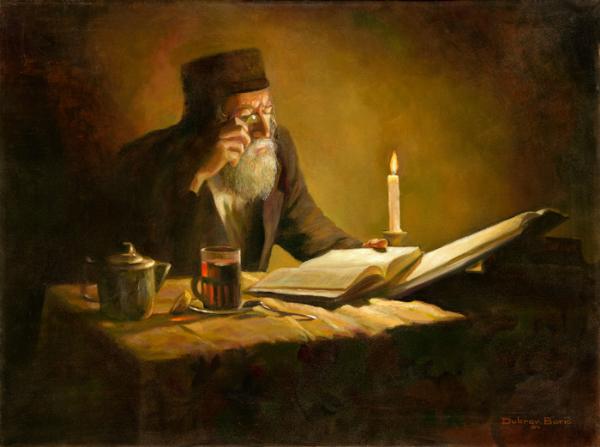
5 – We continued from last week the Rebbes’s letter (אגרות קודש רה) to Reb Berel Rivkin on topic ‘a’ above. שפתותיו דובבות בקבר
The Rebbe writes that we find 4 people that requested that students of theirs should always repeat his תורה and state that they heard it from their רבי.
דוד המלך, רבי יוחנן, רבי יצחק ורב ששת.
Why these particular 4?
Additionally perplexing is that if repeating someone’s תורה causes שפתותיו דובבות בקבר then even if their name is not mentioned (or even plagiarized as one’s own תורה) G-D knows whose תורה it is, so why would that affect the שפתותיו דובבות בקבר? What does giving credit to the originator add to the שפתותיו דובבות בקבר?
The Rebbe writes that the son of the דברי נחמיה dwells on this latter question ‘and we can comment on his answer ואכ”מ’.
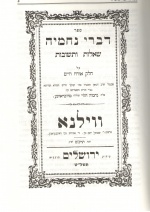
6 – We digressed to talk about this famous חסיד and his life style who was a businessman and a respected פוסק.
הגאון הצדיק רבי נחמיה הלוי בירך גינזבורג מדוברובנה
- Story told by Rabbi Shvay of the דברי נחמיה playing chess as a ‘breather’ after leaning for many hours non-stop. Right before he had a ‘check mate’ move, he would switch positions with his opponent and still win the game!

- The reluctance of his son to publish his תורה and the threat of the צמח צדק that he will not allow him to יחידות!
- The criticism he claimed he received from ‘hot headed’ Chassidim for not printing the responses of the צמח צדק to his father’s letters.
- His name is mentioned in every volume of the Vilna Sha”s.
7- The Rebbe’s explanation to question in 5 above:
True, even if one does not give credit (and says תורה not mentioning the name of the original person who said it) it still causes שפתותיו דובבות בקבר.
However, these 4 individuals have a separate reason for insisting that either their name be mentioned or they had a special reason in general that their תורה be repeated.
1- דוד המלך
We find that דוד המלך who was a ‘בעל תשובה’ wanted that people should know that his תשובה was accepted by ה’.
Now, in general, one should learn תורה only from a righteous person. Thus, the best way to fullfil דוד’s wish that his sin was totally forgiven is by people repeating his תורה!
[If we understood it correctly- דוד regardless whether his name is mentioned would have the זכות of שפתותיו דובבות בקבר.
But he wanted more than that. He wanted people today to say ‘this is the תהילים of דוד המלך’. This proclaims that he was righteous and we can and do repeat his תורה.
2- רבי יוחנן
The גמרא describes the tragic and sad life of רבי יוחנן. He had ten children that passed away during his lifetime.
Now the גמרא says that one who leaves this world leaving behind no sons, הקב”ה is’ full of anger at him’. However, if he leaves behind proper תלמידים this anger dissipates.
(see Rabbeinu Chananel in Brochos 5b that he had an 11th son)
So here again, רבי יוחנן wanted not only to have the זכות of שפתותיו דובבות בקבר with his תורה being repeated. He had an additional motive for his request to say his תורה in his name. ‘Say it in my name – proclaim to the world that I left behind תלמידים!’
שהתלמידים קרוים בנים
3 – רבי יצחק
As quoted in זהר, he too asked (in addition to repeating his words) to be mentioned as the author of his תורה.
For as the גמרא states, even if one leaves a son (and there is no ‘anger’ as above) if this son does not reach the level of his father, it casts the father in a negative light. נאמר על האב מיתה אם אין הבן כמותו
The זהר says that at that time רבי יצחק’s son has not reached his father’s lever and רבי יצחק asked others to teach his son after his passing.
So Reb Yitzchok too had a special reason to ask that when repeating his תורות that people should say-’this תורה is from רבי יצחק’.
4 – רבי ששת
The Ariza”l in שער הגלגולים writes about the נשמה of רב ששת some interesting ideas.
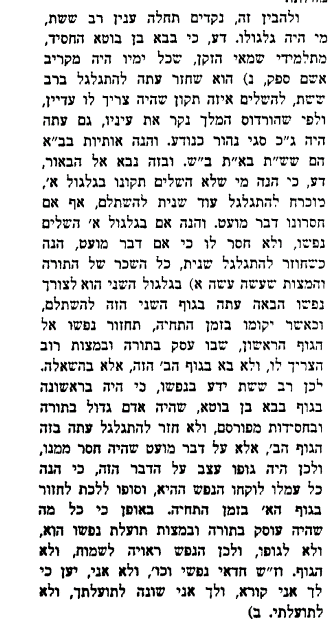
Briefly, רב ששת, who was blind was a גלגול of רבי בבא בן בוטא, who was also blind.
[We mentioned the topic about רב ששת and רב יוסף emulating רב and if they were born or became blind ר”ל]
The reason for this גלגול was that רבי בבא בן בוטא, despite being a great צדיק, needed to return to this world to complete some ‘unfinished תיקונים’.
To accomplish this his נשמה reincarnated in the body of רב ששת.
This is symbolized by their names. בבא – using the א”ת ב”ש method is ששת!
Now, when a נשמה returns in a גלגול in a different גוף, its primary objective is for the purpose of it’s original נשמה; not the current גוף.
That is why רב ששת would say (פסחים ע”ז? ) ”Be happy my soul – it is for you (only) that I have learnt”. For his learning was only for the נשמה of רבי בבא. [See also Tanya chapter 37].
רב ששת therefore realized that his גוף is somewhat sad because when תחיית המתים comes around his נשמה will go back to the גוף of רבי בבא.
[That touches on a different topic since all גופים will be resurrected].
The Arizal stops right there – with רב ששת’s גוף being sad.
The Rebbe concludes the story to come full circle.
רב ששת wants to bring joy to his גוף. The only thing left for his גוף is for it for eternity speak דברי תורה.

How can that be accomplished after his passing? By causing others to repeat his words of תורה. Therefore רב ששת in particular asked his students ‘please repeat my words’.