BSD
Sukkah 48b
Shvat 9, 5783. January 31, 2023
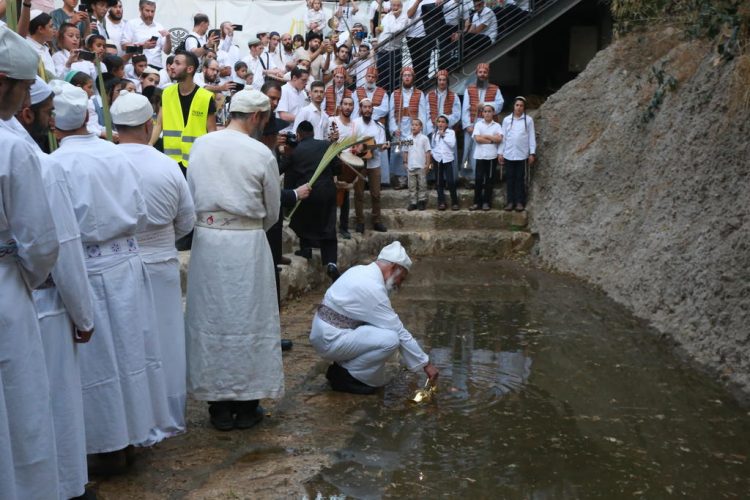
Topics discussed about ניסוך המים. The pouring of well water (about 1 liter) on the מזבח on the seven day of סוכות.
1 – משנה- One would fill a golden jug with a capacity of three log with water from the Siloam pool. When those who went to bring the water reached the Gate of the Water, they sounded a tekia, sounded a terua, and a tekia. The Cohen ascended the ramp of the מזבח and turned to his left. There were two silver basins there into which he poured the water. Rabbi Yehuda said: They were limestone basins, but they would blacken due to the wine.

Tosfos has an issue with מעלין בקודש ואין מורידין. The water was drawn in a gold flask/jug and then poured into something of lesser value and importance – either silver or plaster/clay bowls that were on top of the מזבח.
When changing the לחם הפנים every Shabbos they would not remove the bread from the שולחן which was gold and place it on a table that was silver.

Tosfos answers that this rule, מעלין בקודש ואין מורידין, applies only to כלים. These two basins on the מזבח were attached to the מזבח. Thus the are not considered כלים.
There is another answer that the water of ניסוך המים was not really placed in these כלים since they just passed thru them.
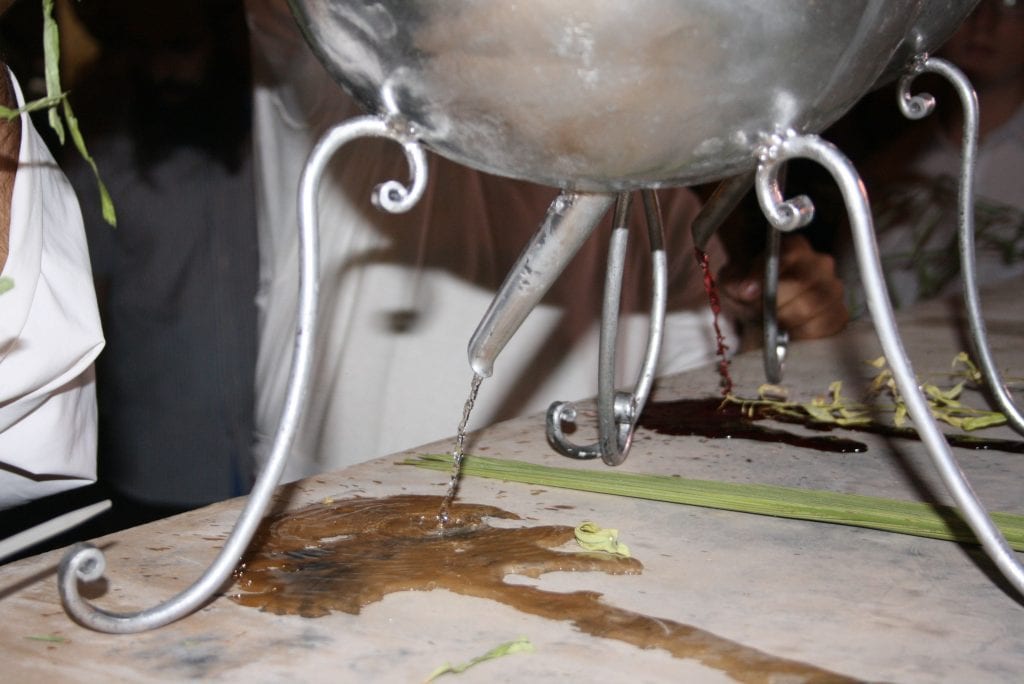
2 – משנה – The two basins were perforated at the bottom with two thin perforated nose-like protrusions.
Rashi says the words ‘nose like’ mean that there were two spouts in each basin and the water and wine passed thru these spouts and landed on top of the מזבח and from there into the holes that were drilled in the מזבח, eventually dripping into the underground water stream. שיתין.
Tosfos, uncharacteristically, asks on Rashi ‘where does he take this all from’?
וזו תימא גדולה. מנין לו אותו כל הענין שמחוטם של הספלים מקלח על גג המזבח, ומשם לנקב המזבח ומשם לשיתין?
Rather the words ‘nose like’ simply means that each flask had a hole, just as much as a nose has a nostril!
The water and wine went straight from the flasks into the hole in the מזבח.
3 – Mentioned the גמרא in Yuma that from the mention of the Esrogim that were hurled at the צדוקי we see that the ניסוך המים was performed in the morning.
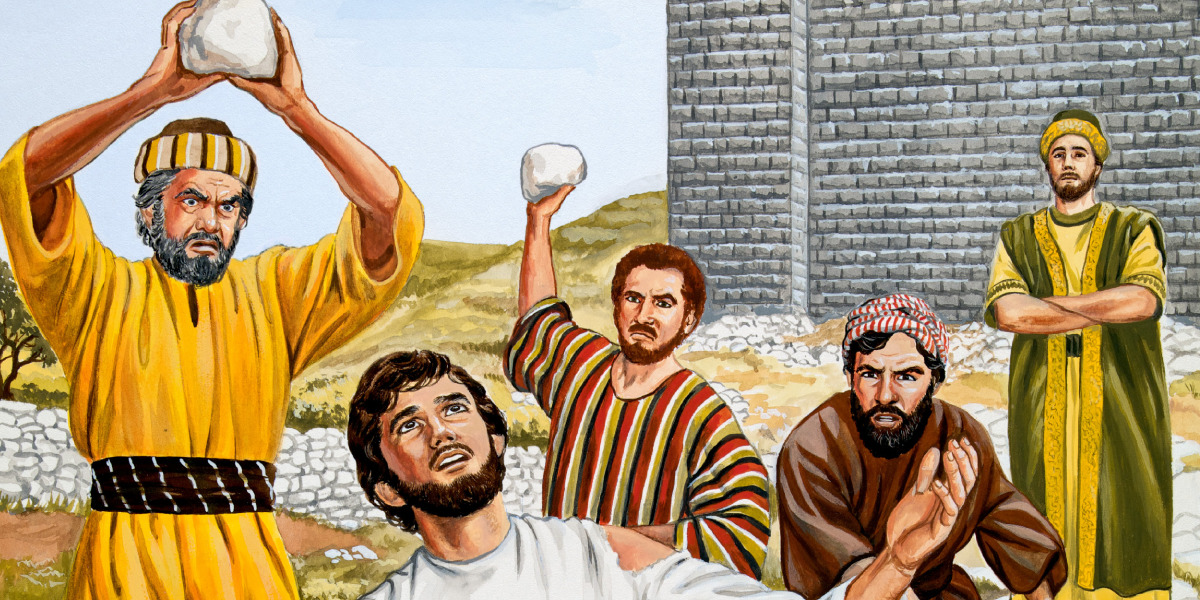
4 – משנה – And the appointee says to the one pouring the water into the silver basin: Raise your hand, so that his actions would be visible, as one time a צדוקי intentionally poured the water on his feet, as the צדיקים did not accept the oral tradition requiring ניסוך המים. In their rage all the people pelted him with their אתרוגים.
Mentioned the Yerushalmi that this poor fellow didn’t survive the Esrogim pelting. Rashi says that rocks were also thrown at him.
5 – Another place where Esrogim were thrown is in Kiddushin when Reb Zeira ? ruled in Mechuza that גרים can marry ממזרים. Since many of the inhabitants of Mechuzah were גרים they took offense and bombarded Reb Zeira with Esrogim.
Why Esrogim?
Mentioned the explanation of the ספר המקנה written by a תלמיד of the Maggid of Mezritch. Here.
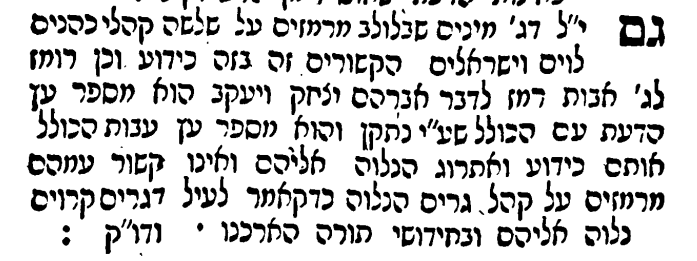
6 – ניסוך המים in general. Mentioned the famous מאמר of the Alter Rebbe 79, 4 delving on the fact that ניסוך המים is not mentioned explicitly in the תורה. This signifies the lofty meaning and idea of ניסוך המים as opposed to ניסוך היין that was performed every day.
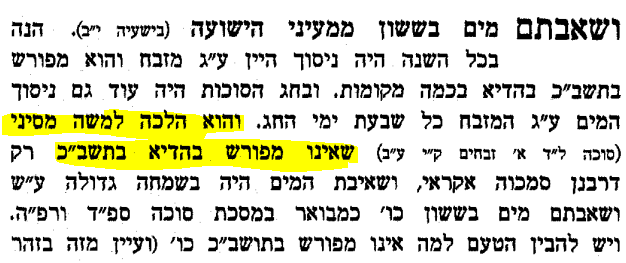
The Alter Rebbe concludes that the שמחה associated with ניסוך המים is from the fact that it could not be written explicitly in תורה שבכתב and only written in תורה שבעל פה.
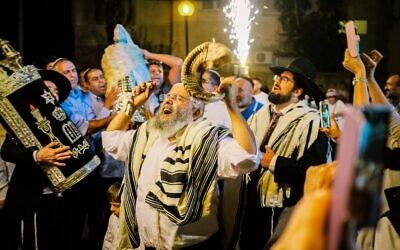
הקפות is not even written in תורה שבעל פה! Thus the even greater joy.
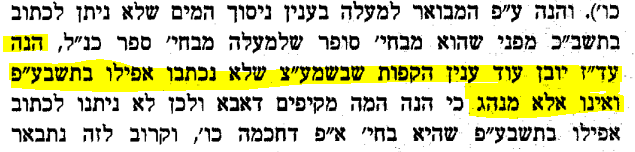
We mentioned half in jest that nowadays הקפות is indeed written in Shulchan Aruch.
So the only שמחה not written is the dancing in the streets on שמחת בית השואבה…..
7 – We finished with an interesting פוילישע תורה on why we do ניסוך המים on Sukkos.
From the פרדס יוסף.
Here it goes:
ניסוך המים is a commemoration for the miracle of the well water that ‘miraculously came up for Rivka when she offered it to Eliezer’.
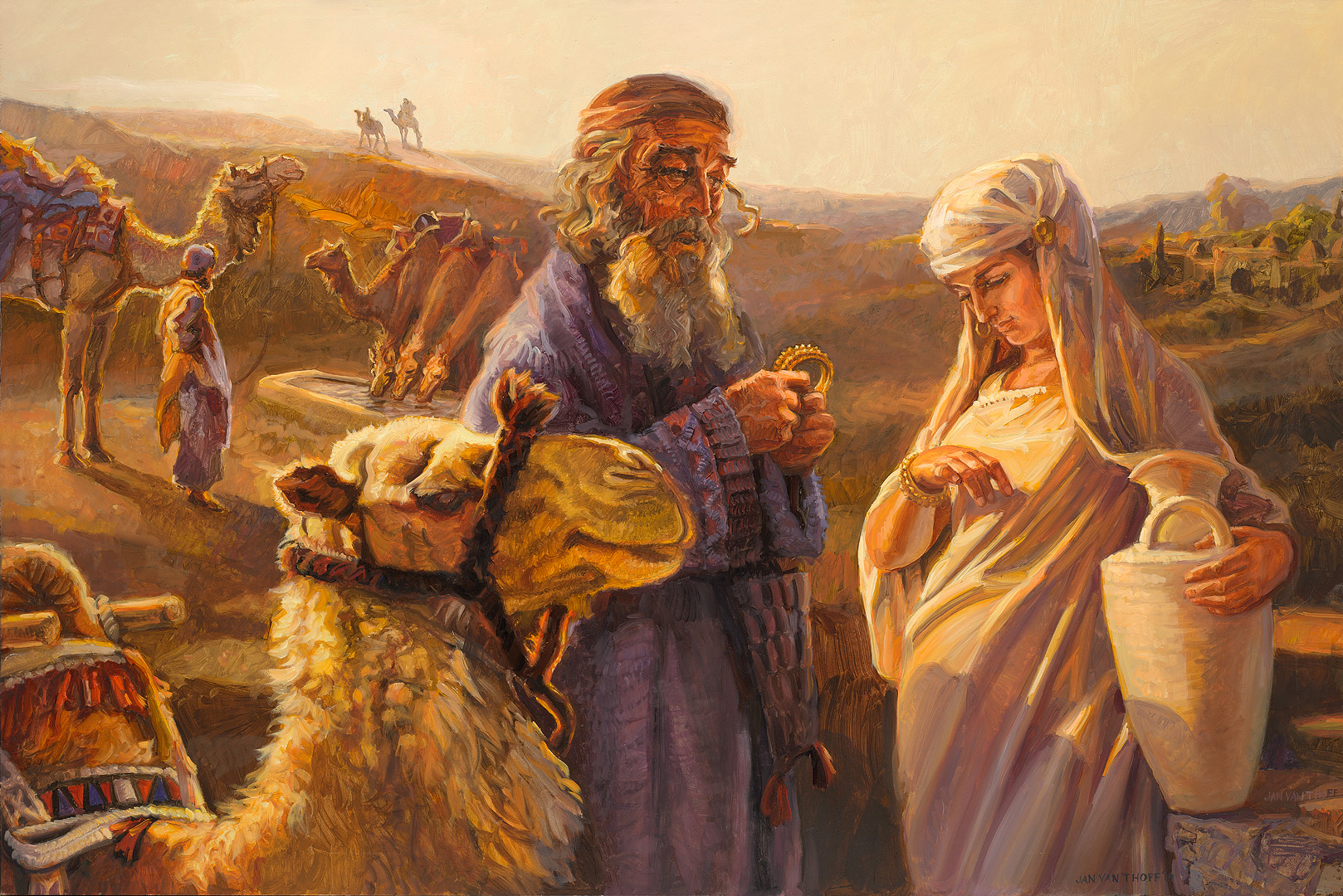
And that occurred on the 15th of Tishrei!
How?
The עקידה occurred on Yom Kippur. [for those who questioned this at the Shiur see עיין בעבודת הקודש להחיד”א, כף אחת סי’ ח’ שעקידת יצחק היתה ביום כפור.]

After the עקידה, Avrohom travelled back to באר שבע. When he arrived, 3 days later on the 13th of Tishrei (ביום השלישי), he heard that Rivka was born.
So far we have established that Rivkah was born on the 13th of Tishrei.
At the end of מסכת סופרים it says that Rivka got engaged when she was 3 years and three days. That is the day she met Eliezer at the well!

If her birthday was Tishrei the 13th, three days later was 13-14-15- ….. First day of Sukkos!
So the miracle of the well water occurred on the first day of Sukkos – the 15th day of Tishrei!

ניסוך המים on Sukkos commemorates that נס.